Deepfakes and the Ethics of Digital Representation
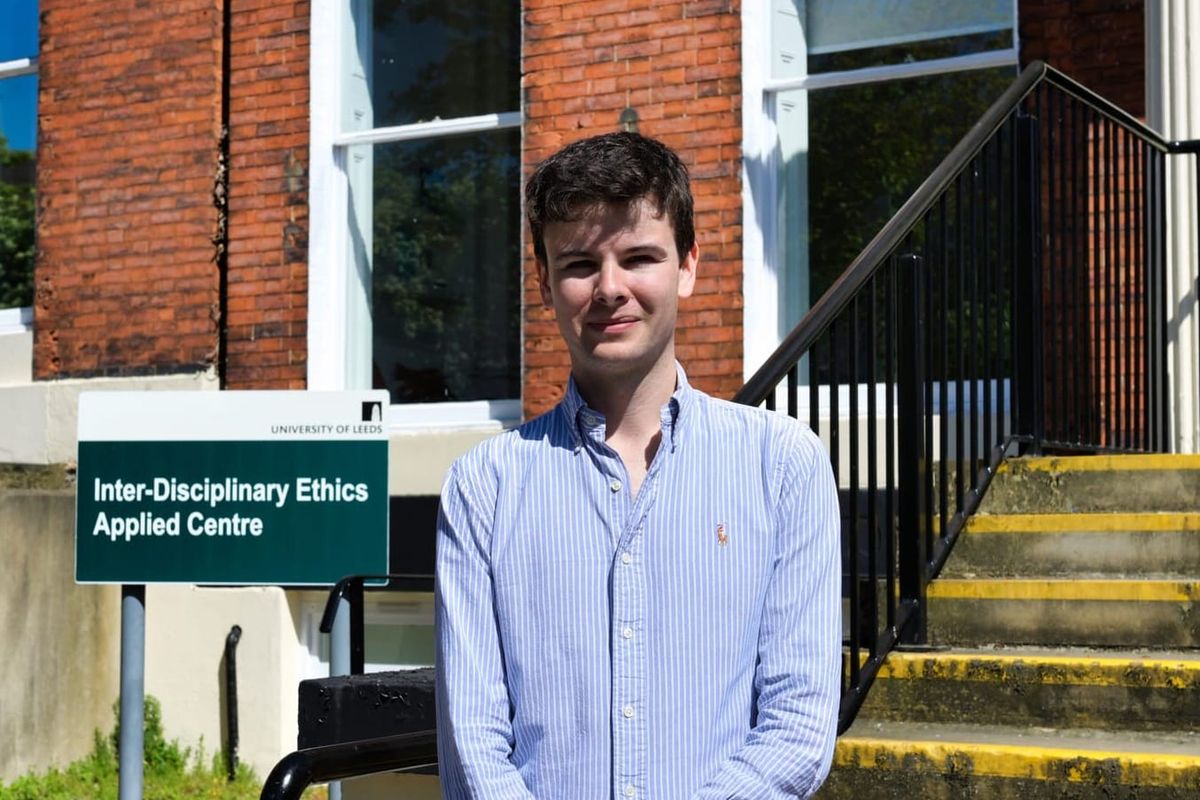
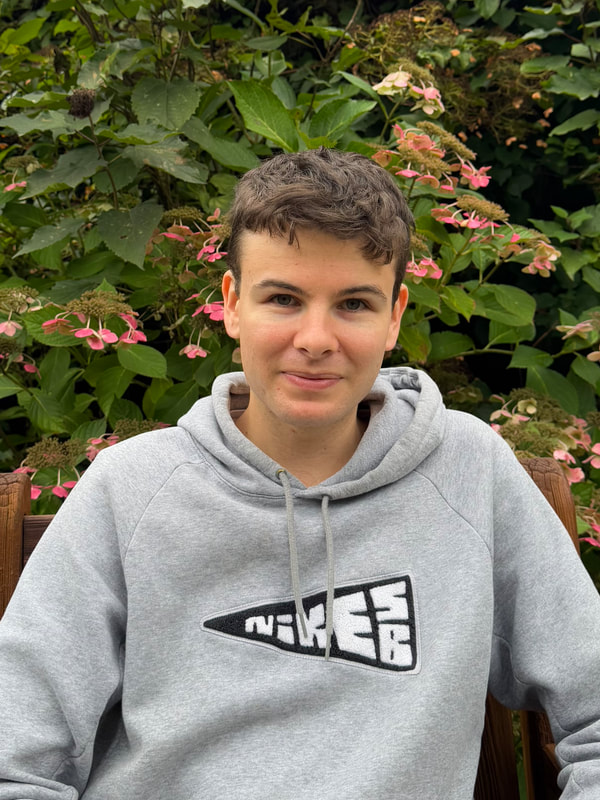
Luke Brunning sat down with Alex Fisher, a Society for Applied Philosophy Postdoctoral Fellow within the Centre for Love, Sex, and Relationships at IDEA: The Ethics Centre, to discuss the ethical and psychological implications of engaging with digital technologies that can distort our conception of reality. Alex's research explores a range of ethical issues arising in online and digital contexts, including video games, virtual reality, social media, and online dating. While at IDEA, Alex is working on the ethics of deepfakes, examining how we should understand the harms they cause and how these insights might help us make sense of what is wrong with some digital representations and virtual realities.
Luke Brunning: Thank you for being here, Alex. You're a post-doc with us funded by the Society for Applied Philosophy. Can you tell us a bit about the work you've been up to as part of your postdoc and what you hope to keep doing in the future?
Alex Fisher: Yeah, so I've been working on various things this year. One thing I've been working on a lot is the ethics of deepfakes. A lot of this came out of the scandal we saw earlier this year with Grok, where it was generating these horrible images of women and in some cases children. I've been working on the ethical impact of these images. So, part of my PhD was on virtual reality, and there are similar harms there where things that people know that aren't real can be really distressing to see. That kind of content, and similar harms are occurring for deepfakes. I've been looking at how this impacts people and some of how people can respond to this and the trauma that these images cause.
LB: Okay, so would it be fair to say that what distinguishes your approach is that your primary focus is the harm, it's not necessarily the epistemology. And so this question of whether we know they're real or not, how we know and under what conditions we know is less relevant. Is that fair to say?
AF: Absolutely. I think there are a lot of misconceptions around these deepfakes, where a lot of people responding to the scandal say things like, oh, they're not real, they're fictional, they're fake. As if that should diminish the harm that they cause. But that's obviously not the case. I mean, even when people know these images are realistic, they still have a really significant impact. A lot of the time when we think about deepfakes, we think about how they might deceive people. But in this case, that's just beside the point. People aren't deceived by these sexual images, but they still harm them.
LB: Okay, when we're thinking about the kind of state of mind of someone engaging with this material, you say that they're not deceived in some sense. They know that they're not real. Is that the same as the way we know interacting with somebody in person is real, or is there some other kind of state of mind here?
AF: Yeah, I think there's a similar kind of thing going on where we know that something's not the case, but often the way that it appears can still affect us psychologically in ways as if it were. I think this can happen when we interact with people. For example, on dating apps where things seem a bit too good to be true, but we still go along with things nonetheless. And I think it's the same kind of thing, where we can have these underlying doubts, or we can know that things aren't as they seem. But this is how a lot of scams work, right? They get us to look past these doubts we have, even when we know the thing maybe is too good to be true, we still end up giving our money away.
LB: Yeah, would you say there are parallels with philosophical research into fiction and aesthetic matters? Where we are engaged with fiction, whether literary fiction or in film does involve some awareness that what we're seeing may not be real, but we can't fully disengage emotionally from that.
AF: Absolutely. I think this is really true of virtual reality, especially. A lot of my PhD was looking at how work in the philosophy of fiction can be applied to the case of virtual reality and how similar notions of immersion appear there and how people emotionally respond to things that, even when they know they're not real, they can be really impactful. So, think about reading a great book or engaging with virtual reality, we emotionally respond really strongly, even though we know the stuff's not real. There's a common thread through that in work in philosophy of fiction and imagination, and applying that to new technologies that do the same kinds of things.
LB: So would that mean then that the way we need to start thinking about deepfakes has to join up with the way we're starting to grapple with AI companions and AI entities where this may not be a representation of a real person, but nonetheless, people are engaging with it with a similar immersion, to use your phrase?
AF: Yeah, I think that's exactly right for AI companions. I think they very much feed off this immersed form of engagement where we almost don't really care that the chatbot isn't real, it's not a real person. It doesn't matter. The reality goes out the window, and I think it's exactly the same for these deepfake images. Whether they're real or not, they still have the same emotional impact and for the chatbot, they have the same emotional appeal. They can offer a sense of intimacy, offer us someone to confide in even if they're not a real someone at all.
LB: Is the thought then that the philosophical mistake is to think the question of reality is having a grip in a practical, ethical sense, where it's actually, that's a subsidiary question, almost a theoretical question, which people, when they're engaging with, whether it's a deepfake or AI companion, they're not really engaging with that issue at all.
AF: Yeah, absolutely. I mean, I think as philosophers were very interested in people believe, what they know, these are classic questions in epistemology. But a lot of research in psychology says that our considered judgments in these cases don't make as big a difference as we might think. What we know, what we believe, doesn't matter so much for how we respond to media, especially these types of media where they're really realistic. So realistic deepfake media, imagined or AI companions that behave exactly like a real person would, doesn't matter what our beliefs are, is how we engage with it, and that's the same whether it's real or not.
LB: Okay. Can you maybe say a little bit more about where you think the harms lie then. Let's just focus on deepfakes for the sake of argument. We've kind of put this question of reality to one side. Sorry to the epistemologists out there! And so now the question is: what are the harms? I mean, is there a central core harm or is it a family of harms?
AF: I think there are a couple of ways in which these deepfake images, especially sexual, deepfake images harm people. I mean, first, there's an obvious psychological harm. We're seeing reports of people experiencing symptoms of PTSD following seeing images and deepfake videos of themselves, doing things that they never did. So even though they know that the content wasn't real, they're still having flashbacks to things depicted in deepfake videos. There's a clear kind of psychological harm.
There's also a representational harm of what these images do, how they function, and how they objectify, sexualise, humiliate, they exercise control over how people present themselves. You posted an innocent image 7 years ago, and now everyone's bombarding you with sexualised versions of it. Even aside from the psychological impact. That impacts how you present yourself online. And these days we're very, we care very much about how we, how we appear online. And this exerts a kind of control over how we're able to do this.
LB: Okay. So, does your research touch on sort of like the practical and policy dimensions of this, like having identified some of the core harms? I mean, an obvious question, people are going to want to confront it sort of, can we address these harms? Is there an obvious way of doing that? Control is really interesting. Is the answer to give people more control, give them back control, like what do you think we need to be thinking about?
AF: Yeah, so the policy landscape on this is honestly a mess. There's been a kind of whack-a-mole type approach where over the past 5 or 10 years, different digital, image-based or digital representational harms have emerged with things like upskirting images, revenge porn, deepfake AI images, and each time a kind of small piece of legislation or an amendment is tucked into some bill that's passing through parliament that criminalises that specific thing and goes no further. And so something else pops up 2 months later. It's just this whack-a-mole approach where we're always being very reactive.
One thing that I think is really interesting is that some legal scholars and philosophers are interested in more proactive approaches. Having a kind of proposal for a law that would cover a lot of these different cases that are exploiting the same kind of representational harm. Having a more wide-ranging offense rather than each time something comes up, we criminalise this particular thing, and this particular thing, and then something else happens.
LB: Could you tell me what the content of such a piece of legislation should be? I guess the worry here is that it's going to be really challenging to pin down and avoid these particular harms without being over extensive. I was immediately thinking, sort of definitionally working out what constitutes a deepfake sounds quite challenging. I can imagine that writers of fiction, cartoonists, people whose job it is to depict people in ways that they may not want to be depicted, might be worried here that like kind of their work will fall foul of this legislation. So, can you say more? I guess one thing that people might want to know is whether the issue is the fictionalised representation of someone doing something that they haven't done or whether it's the sexualised nature of those representations.
AF: Yeah, so at the moment, a lot of the laws have just been about sexual representations. I mean, we've seen, even in recent weeks, there have been a few more political cases that don't involve sexual content, but typically those aren't illegal. There have been some calls to make them illegal.
One of the interesting proposals that's happened, and this comes from a legal professor at Durham, Clare McGlynn, is that she's proposed this new offence of intimate intrusions. This resuscitates a kind of old feminist idea from the 1970s and 80s, that we might introduce a new offence that's covering a lot of these types of cases, all of which fall under a similar type of intimate intrusion. So, kind of exerting control and sexualizing someone's digital representation. These are all types of intrusion into someone's intimacy.
But some of the opposition to some of this legislation has come exactly from the source you say. So some of the laws around banning sexualised deepfakes have actually faced opposition in Parliament from people claiming, oh, this would criminalise making cartoons. I think there's exactly this trade-off you're saying between a kind of free speech ability to satirise on the one hand (obviously, we want to criminalise a lot of these horrific images) and some of this kind of satirical content. The worry is, is that laws banning deepfake AI will kind of go too far and criminalise some other content that we don't want to.
LB: Just picking up on a kind of thread in what you're saying and cycling back to this issue of control. It sounds to me you're saying, and with this idea of intrusion on the table as well, that the issue here is that when someone puts an image of themselves into a public domain, and that image is then subsequently used as a springboard for something else, it's that move, which is problematic. I'm wondering, is that the case, or would you think that these problems exist with images which have been generated from other source material? Maybe the person concerned, hasn't put an image of themselves? Maybe the image exists, you know, from an organisational photograph or someone just uses a photograph they have themselves to do it, right? How much of it is about worrying about the extent to which the things that we put out there are misappropriated as opposed to just the representation of someone in general.
AF: Yeah, I think that it doesn't matter whether it's something that the individual has put out or whether it's created from scratch, so to speak. There are really interesting conversations around how this compares to other laws we have around things like libel and defamation, where we do have a clear right not to be represented in certain ways, right? If someone represents me in a way that defames me, then that's illegal. Whereas if someone does that with a picture showing me in a sexual position that I was never in, then that's not illegal. So there's a question of whether we should just be extending some of these existing ideas that we're very happy with for language to the case of images.
LB: Okay, that's interesting. So it's part of the problem here that we just don't have an adequate way of thinking about representation, right? We're comfortable with certain forms of representation. Obviously, I suppose a hangover from the time when print media was the main source of media, to this fast-paced digital image-based context where images are representing people. Is that part of the problem? You just need to think more generally: what is it to represent someone? What is it to misrepresent them and take it from there?
AF: Yeah, I think part of what's happened is we were always able to do this kind of thing. We were always able to draw pictures of someone, making them appear in a way that they actually aren't. But what's really changed is the way in which these can now be generated really realistically through AI. This is an old problem that's just become much more pressing. I think an extension of how we think about language, which has always been very malleable, we've always been able to do this with language so easily. We're now able to do that in the same way with images. The idea might be, well, maybe we should start to think about images similar to how we have thought about language in this sense.
LB: So can I ask you about some other work that I know you've done. Looking at deepfakes, the way they're circulating on social media is one thing, but you've also been looking at other kinds of arenas in which we represent ourselves. You mentioned dating apps already, right? Can you say a little bit more about your work in that area and what you hope to be doing in the future as well?
AF: One thing that I've been really interested in in some of my past work has been looking at how we role play as a character in cases like video games and virtual reality. And thinking about whether similar ideas might apply to certain online contexts, whereas similarly we present ourselves a certain way. In some cases, this can be very authentic and on social media, where we're exactly the same as how we are in person. But in other cases, obviously there's quite a big discrepancy, and this is a massive problem on dating apps with catfishing and people presenting themselves, even subtly, in ways that aren't how they really are when you meet them in person. I'm interested in kind of what counts as representing yourself authentically as well as what the ethical side of this is. What's unethical? I mean, do you always have to present yourself authentically? Is it okay to conceal certain information on dating apps to kind of protect yourself in certain ways?
LB: What are the moral concepts in play here? The thing that immediately jumps to mind for me would be consent. Obviously we have a literature exploring this question about what people have a right to know in order to give consent to things, right? People might say, look, I would have never gone on a date with this person if I'd known so-and-so fact about them and these are often called deal breakers. That's the consent direction. Is that something you're touching on? Are there other moral worries we should be having about representation, misrepresentation, inauthenticity, and the whole smorgasbord of possible issues there?
AF: Yeah, in terms of consent, I think that's absolutely a really applicable notion. But a lot of the attention to consent typically focuses on consent to sex, and within the philosophical literature, that's the massive focus, everyone's very interested in what counts as giving consent to sex. What types of information might vitiate someone's consent? So if I don't tell someone that I have this property, might that vitiate their consent. And there have been a bunch of really interesting legal cases on this as well. Whereas what I'm thinking about is, as you say, thinking about more general consent to romantic relationships or even just, yeah, going on a date, what kind of information is impermissible to do so there. And it's this classic kind of conflict between privacy, on the other hand, and the other person's right to know certain information. I mean, romance is a sphere where intimacy is meant to be a goal. We're meant to have mutual knowledge of our partner and know all this information. Some philosophers even say that love requires seeing one's partner accurately. And so there seems like a domain where our ethical obligations for disclosing certain information might be heightened more than others. And that's why I think this is a really interesting field.
LB: Yeah, that's super interesting. I guess there's also this question about timing, right? A critic will say to you, look, the reason that we focus on consent to sex is that that's often something that happens a bit later on after people have met. That's not always the case. But we might think that going on a date, or beginning a series of dates with someone, might be chosen by this person as a kind of way of informing them of an important piece of information, right? We could have a kind of well-intentioned dater who thinks, look, I know there's this piece of information about me that's contentious or that somebody might want to know, but instead of sort of slapping it on my dating profile, I'll use the date itself as a kind of way of talking that through. And maybe they have good reasons for that, right? Maybe historically they've been overlooked or neglected. There's a justice issue here. For example, maybe it's about their religion or their ethnic background, their history or something. They're subject to prejudice.
So how would we approach that? Do we think that there are certain things that people ought to know before they go on a date and then some other things that maybe they ought to know before they engage in sex with somebody? Do we have a kind of unified picture between these different cases. How do we even begin to answer this question?
AF: Yeah, I think these are really hard cases and there are a lot of contentious properties, as you said, religion. Gender identity might be another really contentious issue, where it's unclear whether this is something that you have to disclose at the outset, maybe after a few dates, probably prior to sex. We've seen various legal cases around this in the UK recently. So I think, there's this really tricky question of what point you ought to disclose this information. There are lots of strong views on this. Some things you ought to disclose just at the outset. But as you say, there's all these justice issues where people who have experienced discrimination from disclosing this information might well wish to conceal certain aspects and maybe only reveal them later. Within a romantic relationship, we often think about this kind of mutual knowledge as the goal. But I think a really interesting question is whether there's certain information that we might permissibly conceal from even a really committed romantic partner to protect ourselves, essentially.
LB: Yeah, so we have these questions about the nature and value of privacy. I mean, that's also a question that really connects with this broader digital landscape that many of us are swimming in, where we're seeing a social expectation of kind of disclosure, revelation, production of knowledge. Whereas actually for many people, privacy is vitally important to the production of the self and of the identity. There is that key tension.
I'm also thinking about ideas of conversation and interaction. I guess a lot of people might think, look, the reason I don't put things on my dating profile is, firstly, no one reads it, but secondly, if they do, they lack context, right? And context is really important when it comes to certain potential deal breakers, right? Where we're often quick to judge or the context really supplies a background, right? So, someone might have been arrested. And maybe it really matters to them that they tell a potential partner about this because the context is actually, well, I was arrested at a certain protest, protesting a certain policy, which I feel strongly about, which may make that arrest look very different from someone else's arrest. This raises this question: what role do you see for dating as a practice where people are figuring each other out and coming to know each other? Is it a practice that leaves room for these ambiguities and for people to think about finding the right context, providing context, or do you think people should be a little bit more upfront with these pieces of information?
AF: Yeah, I think it's very difficult. I mean, like all technology, it imposes various constraints on how we're able to do these things. So we have limited space in a dating app profile to even disclose this information. As you say, it may well be the kind of subject that requires a lot of nuance that we just simply can't do. Even in an online conversation, it might require an in-person conversation for some of these issues. I think we definitely would not want to push people towards simply disclosing a laundry list of features about themselves, potential deal breakers. This is one common complaint that people have about online dating is that it reduces down to this laundry list approach where we're saying, I have these preferences, tick boxes, this person is this, this, this. I won't date someone who's this, this, this. And, as you say, romance potentially has much more scope for this kind of conversational approach and negotiation, where we get to know one another. We have this context of why certain properties, which we might have been very opposed to, might actually be, given the context, not so bad. There's some reasons behind that that we can come to terms with in a way that a lot of these dating app platforms and profiles, especially just don't allow this--this kind of nuance.
LB: Authenticity is a concept that's running through a lot of your work. In fact, it kind of connects both of these strands of deepfakes and online dating and other things. Do you have a view about what authenticity is. I know that there's lots of disagreements philosophically about what it is and people don't really know how to think about this. But do you have a view that you think is plausible?
AF: Yeah, roughly. My background is in aesthetics. I think a lot of work in the philosophy of art can be really helpful for thinking about authenticity. There are lots of people who are very interested in what makes a representation of something authentic. Say you see a painting. It can be an authentic representation in terms of representing the place accurately. It could be an authentic painting in terms of representing the artist's kind of emotions. It can be inauthentic in that it could be a forgery. So there's all kinds of things we can mean when we say that something's authentic. But I think largely we mean this in dating, this fidelity, accuracy of representation. What we're talking about here is representing the person's properties and not leaving important things out. Not omitting to mention certain things. So a profile of someone that fails to mention something that's really important, even if it contains no lies, can still obviously be inauthentic through omission. I think this notion of authenticity is fidelity is really how I tend to think about it and that's how people think about it in certain artistic contexts as well.
LB: Final question on this then. What role do you see in the future for technology on this subject? We seem to have a tension. On the one hand, we're worrying about the ability of generative AI to produce realistic seeming deepfakes, right? On the other hand, though, we might think, one of the things that's missing in something like online dating, is precisely that it's really hard to get a feel for what someone's like, that a photograph isn't really adequate, it doesn't give a sense of someone's kind of character, how they appear, their charm, their sort of way of engaging. I have heard it suggested by Paula Sweeney, for example, a philosopher in Scotland, that actually, using generative AI to kind of produce sort of digital avatars of ourselves, can help with authenticity of representation when it comes to us, right? We want people to engage with us as we are. We want to get a better feel for other people as they are. A way of bridging that gap in the digital space is to create and circulate verified or secure representations of ourselves that allow people to get that sense, whether that's in virtual reality or through some kind of video or something like that. This is a view that I found really interesting when I heard it. I mean, my intuitive thoughts here is this is very bad, But I'm curious about what you think, right? It seems that technology is a blunt instrument. We can use it in either way. Do you think there are positive agency enhancing ways that we could use this stuff or should we just steer clear altogether?
AF: Yeah, there's a massive precedent for this. Work on video games. Many people have met their partners through online message boards originally and then role-playing games. I mean, marriages through World of Warcraft and this kind of thing. This is an old idea that people meet each other through avatars that maybe they feel expressed themselves in certain ways better than just messaging someone would or even maybe better than meeting in person. People feel more comfortable having this conversation mediated through avatars. This is an old idea. I think it's very natural to think about whether dating apps might be wanting to employ this same idea that has such precedent.
Obviously there are worries around this, around outsourcing our identity to a kind of avatar in these ways, especially when it's an avatar that we don't directly control, but which we shape, a kind of digital twin that acts on our behalf, as opposed to us directly controlling it. But this is an old idea. I think this is very interesting as a possibility for allowing us to express ourselves.
Marginalised groups for years feel they can express themselves much more authentically through digital avatars and digital spaces where, in some cases, they don't face the kind of persecution that they would in physical spaces. These ideas would be really helpful in certain communities.
LB: Okay, it's clear that however things go, there's a lot of morally contentious territory to navigate, right? I want to thank you so much for talking to us about your work. It sounds really fascinating, and I hope the rest of the project goes well.
AF: Thank you, Luke. Thank you for having me.
This conversation has been lightly edited for clarity. And, if you'd like to hear more, check out Alex's website.